
Composite sandwich panel buildings
Steel-faced insulated panels with superior thermal, acoustic and structural performance.
How the system works
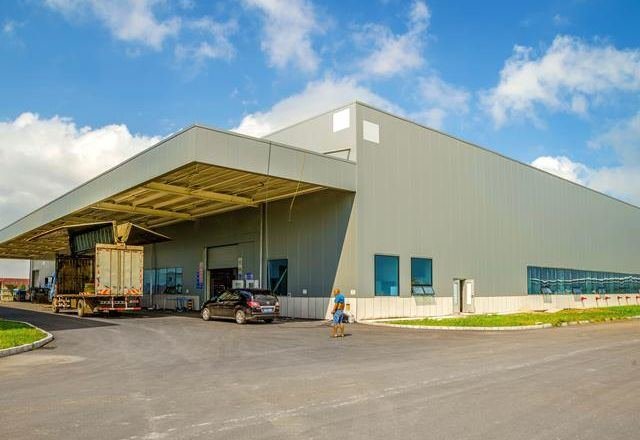
Our composite panel construction method uses insulated sandwich panels: a rigid core bonded between two steel skins, with interlocking joints that lock panels together into a continuous wall or roof. It offers superior thermal, acoustic and structural performance, which makes it ideal for mine camp applications.
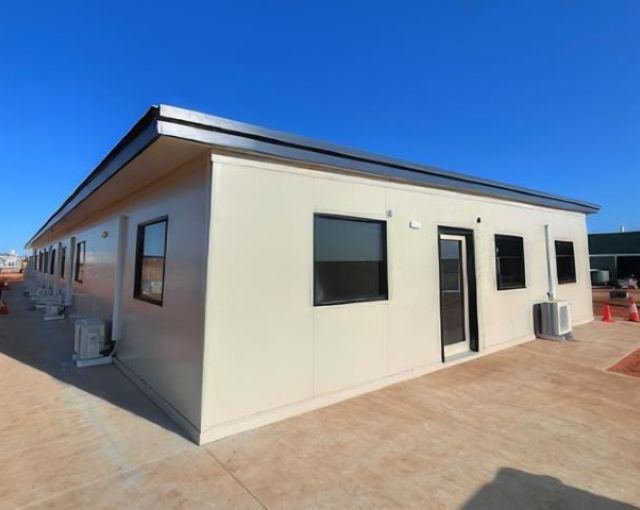
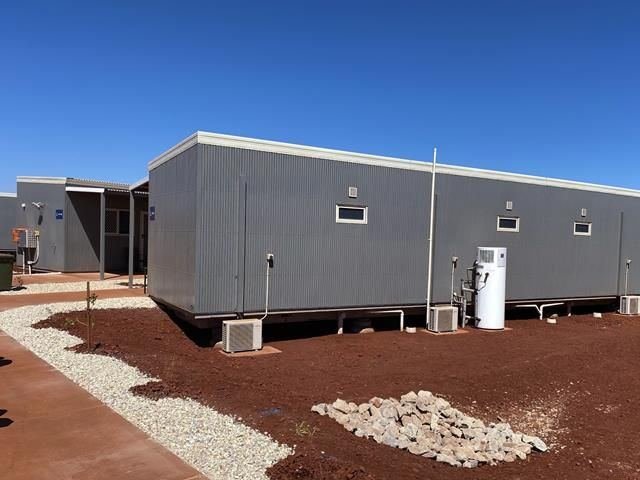
We used a rapid-build panelised system to design, build and fully fit out the Coburn Mineral Sands buildings in Western Australia in just four months. The same approach works for worker accommodation, offices, warehouses, workshops and cold rooms.
Typical specification
- Panel make-up
- Insulating core between two steel skins
- Core options
- PU/PIR, EPS or rockwool (mineral wool)
- Joints
- Interlocking tongue-and-groove or concealed-fix
- Typical thickness
- Around 50–200 mm, depending on use
- Structure
- Steel frame, or self-supporting for smaller units
- Used for
- Mine camps, offices, warehouses, workshops and cold rooms
Typical values. Exact specifications depend on the product and your project.
Key benefits
Why clients choose this system.
Thermal performance
A continuous insulated skin keeps buildings comfortable and air-conditioning costs down.
Acoustic comfort
Insulated panels reduce noise, important for workers sleeping near operations.
Durable
Steel skins resist knocks, weather and pests, and are easy to clean.
Fast
Large panels cover big areas quickly, ideal for compressed programmes.
Fire options
Rockwool cores are non-combustible for walls that need a fire rating.
Proven
Our rapid-build panel system delivered the Coburn project in four months.
Things to consider
Every system has trade-offs. Here's what we'll talk through with you.
Choosing the core
PU/PIR insulates best, EPS is most economical and rockwool is the choice where fire rating matters. We'll match the core to your project.
Look and feel
Steel-faced panels suit industrial and site buildings. Homes and villas usually suit SIPs, LGS or volumetric modules better.
From our gallery
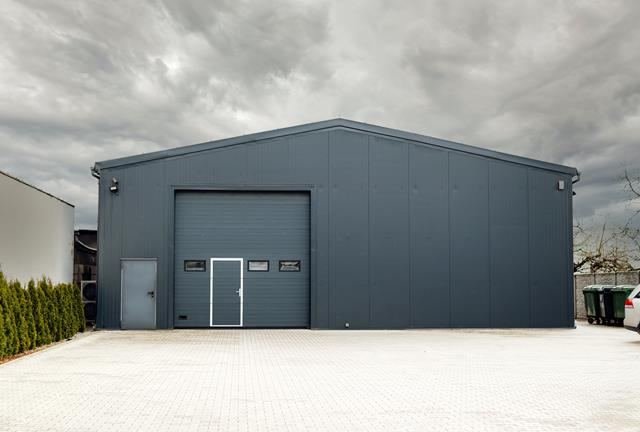
A selection of recent enVision buildings.
What we build with this system
The services where this system is often a good fit.
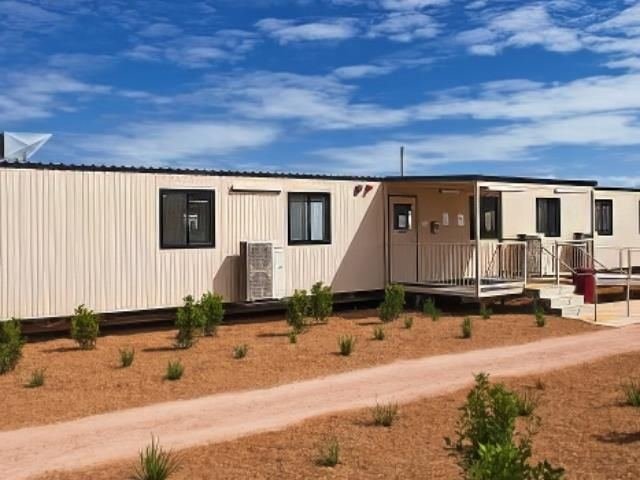
Built in the factory. Finished on your site.
Built in sections
Each module is made in a controlled factory environment, away from the weather, with strict quality control.
Delivered to site
Finished sections are transported to your site while the groundwork is prepared.
Assembled into one building
Modules are joined into a single, cohesive structure, with site work completed in as little as four weeks.
Composite sandwich panel buildings: questions answered
What is a composite sandwich panel?
An insulating core bonded between two steel skins, with interlocking joints so panels lock together into continuous walls and roofs.
Which core should I choose?
PU/PIR gives the best insulation for its thickness, EPS is the most economical, and rockwool is non-combustible for fire-rated walls.
Is it suitable for mine camps?
Yes. Its thermal, acoustic and structural performance makes it ideal for mine camps and remote site buildings.
Can panels be used for cold rooms?
Yes. Thick PU/PIR panels are widely used for cold rooms and temperature-controlled buildings.
Other modular solutions
- SIPs panel systemStructural insulated panels with an EPS or PIR foam core: strong, airtight and highly insulated walls, floors and roofs.
- Light gauge steel (LGS)Precision-made galvanised steel frames that won't rot, warp or attract termites, for homes, extensions and commercial buildings.
- Ready modules from ChinaFactory-finished modules sourced from China, shipped to Indonesia and installed on your site. A cost-effective route for camps, offices and housing.
- Flat-pack & expandable container housesContainer-sized units shipped flat or folded, then assembled or unfolded on site in a short time. Ideal for site offices and temporary camps.
- Shipping container buildingsConverted steel shipping containers for cafes, retail, offices, studios and homes with a strong industrial look.
- Volumetric modules & podsComplete room-sized modules and bathroom pods, finished in the factory, from the CORE module to living PODS.
Is this system right for your project?
Tell us what you're planning and we'll recommend the best modular solution for your design, budget and site.